
Aqueduct
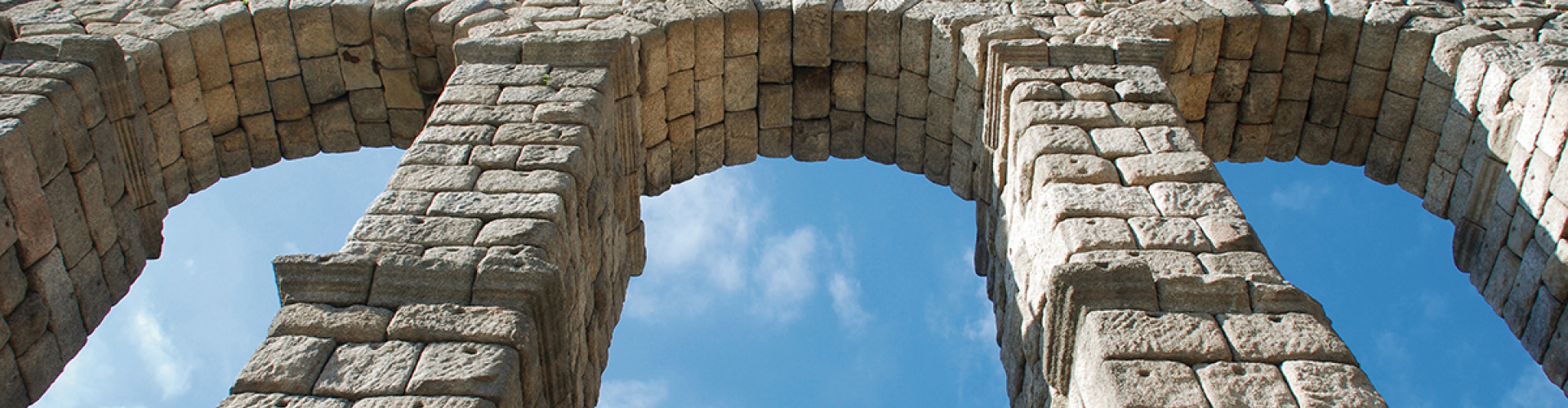
A masterpiece of Roman hydraulic engineering
The Segovia Aqueduct, an exceptional feat of Roman hydraulic engineering, is one of Spain’s most iconic and renowned archaeological treasures.
Constructed using large granite blocks set ‘dry’ (without mortar), it was built to supply water to Segovia
The water flowed through the channel at the top, feeding cisterns and public fountains.
Early 2nd century AD (reign of Emperor Trajan).
- Total length, from its source in the Guadarrama Mountains: 16,186 m.
- Archwork: 959 m.
- Maximum height: 28.10 m.
- Total number of arches: 167.
Its route beneath the pavement to the Alcázar has been documented since medieval times.
Water quality was ensured through decanting, removing entrained and suspended particles, thanks to the sand traps; this system is evident today at the Casita de Piedra or Chamberí Sand Trap (1B), a few metres above the start of the archway, and at the San Gabriel Sand Trap (1A), where construction had already begun, neither of which are entirely Roman in construction.
The Aqueduct, as a symbol, appears on the flag of Segovia and on its coat of arms, and was the mint mark on the coins minted in Segovia (1 BC).