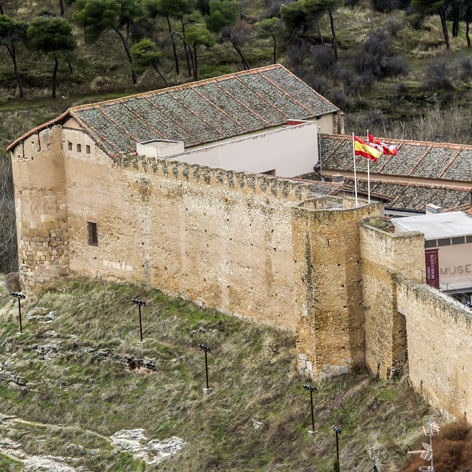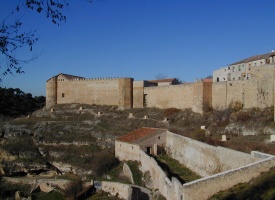
Casa del Sol (Segovia Museum)
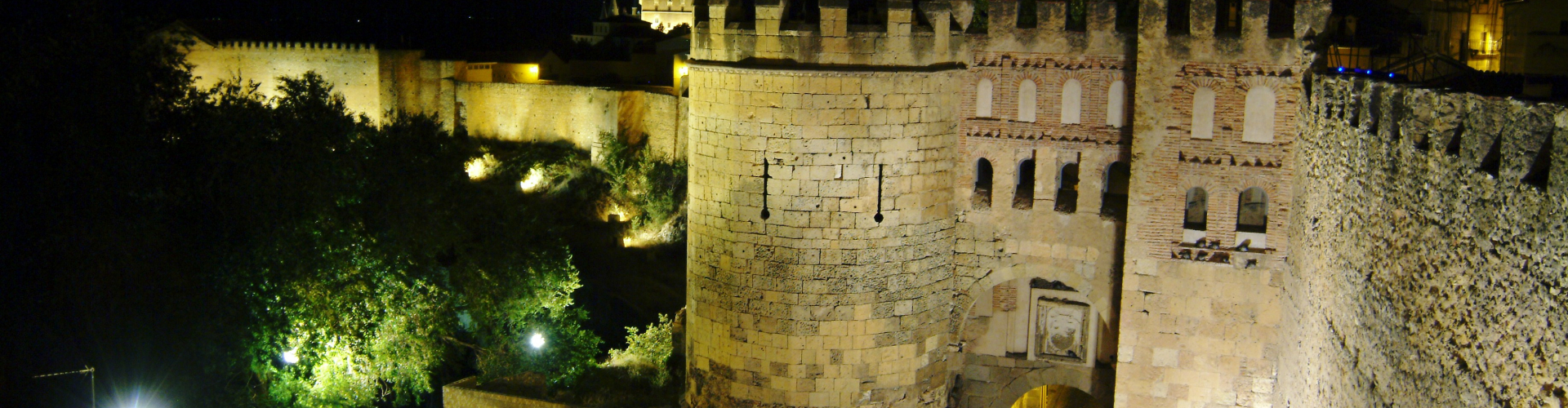
From defending the city walls to protecting art
Originally, the building was constructed on a trapezoidal section of the city walls themselves. Given its physical layout, which is determined by its location on a rocky outcrop in the upper part of Segovia, its defensive purpose would logically have been that of a bastion, the effectiveness of which would have been enhanced by the use of artillery towards the end of the Middle Ages.
It was in the mid-15th century, in 1452, that King Henry IV definitively transformed it, by building on its platform, into a slaughterhouse serving the Jewish quarter, consisting of a building and pens for the livestock.
The use of the slaughterhouse, in this case serving the whole city following the Edict of Granada, which led to the expulsion of the Jews, continued until the early 1970s. The municipal property was transferred to the State in 1980, with a view to establishing the permanent home of the current Segovia Museum, which became operational in 1991.