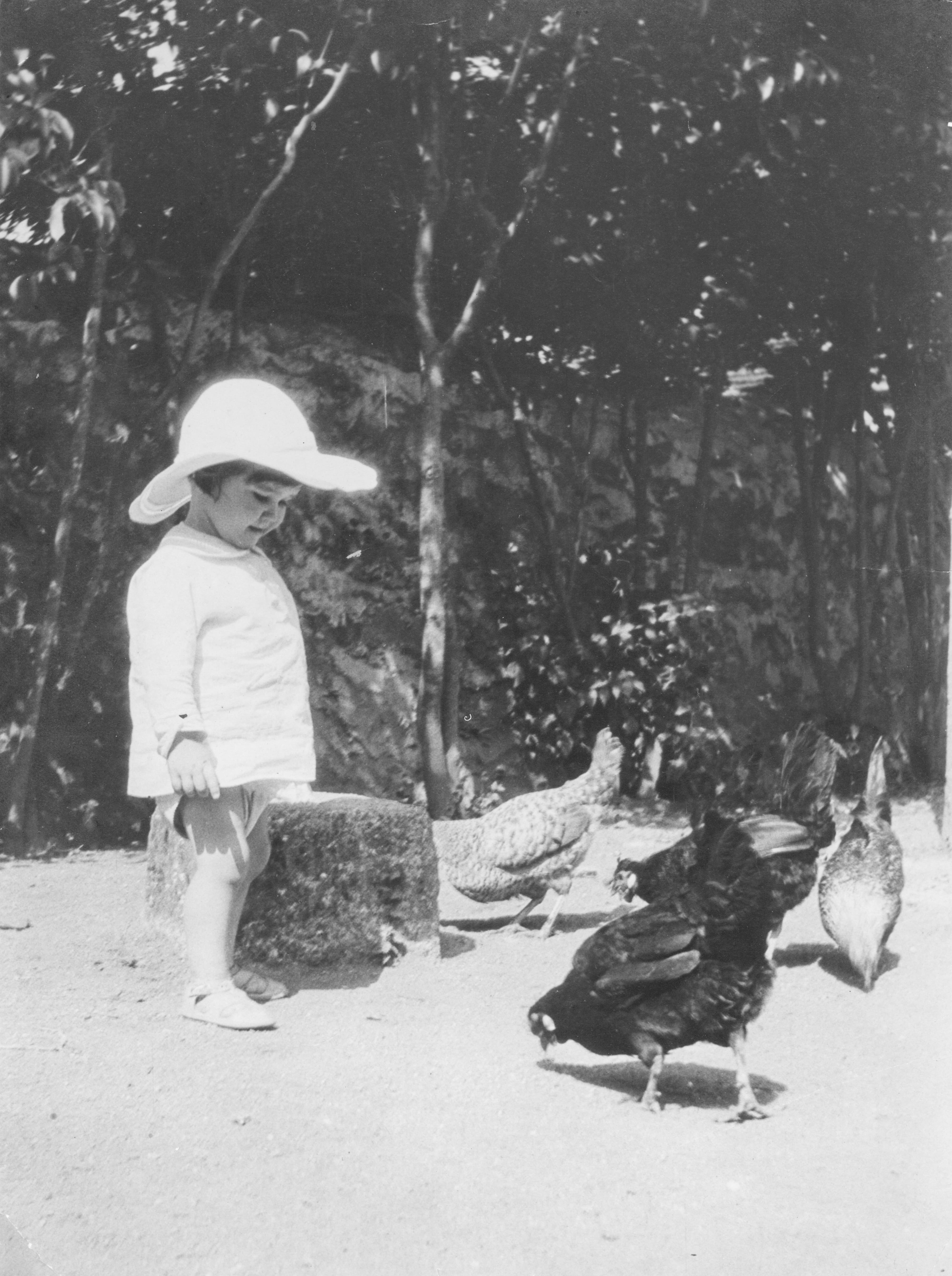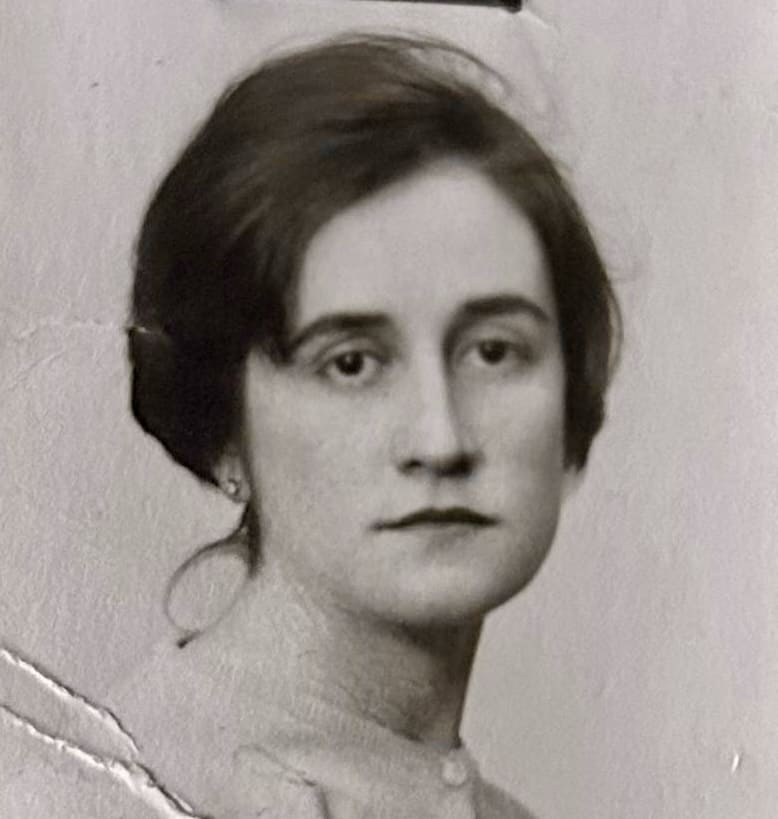



Matilde del Amo Castro was born on Calle de la Paz in Madrid in January 1927, opposite the Albéniz Theatre. On her father's side, she was the daughter and niece of booksellers and publishers, while her mother, Dolores, was the daughter of a Spanish military man and was born in Cuba.
The family lived above the Catholic bookshop and publishing house ‘Hijos de Gregorio del Amo’, where her father, Mauricio, and her uncles worked. She always proudly recounted how, at the age of fourteen, her grandfather, Gregorio del Amo y Gómez, walked from Morata de Tajuña to Madrid with only a small bundle. He got a small job at the bookshop, where he gradually took on more and more responsibilities until he finally inherited it, as the owner had no descendants.
Matilde had seven siblings, but two died shortly after birth. She was the youngest of the five who survived. She was nine years old when the coup d'état took place in 1936. The first months of the Civil War, and especially the autumn of 1936 in Madrid, were very difficult and distressing times that would remain etched in her memory for life. Her brother Alejandro, editor-in-chief of Signo magazine, was murdered in the Fomento prison at the age of only 23, and her father was arrested, although he was later released.
He was nine years old at the time and remembered hearing the bombs falling from his home and seeing several of them hit the Telefónica building. One day, a shell exploded very close by and, given the great risk of remaining in their home, they went to the house of some uncles who lived on the same street, but in a very large building that overlooked Carretas Street and was more protected. Among the cousins he usually played with was his beloved cousin Montse, who was the same age. A writer and winner of the National Children's and Young People's Literature Prize (1978), Montserrat del Amo Gili was the author of the play ‘La Noche’ (The Night), which she wrote for the puppet show that Paco had been working on for many years and which he was ultimately unable to finish.
As soon as they could, the family left Madrid, thanks to the Cuban embassy, which had helped them obtain Cuban nationality. They moved to the Nationalist zone and settled in San Sebastián, where her father found work as the director of a publishing house, and they lived there for eight years.
Matilde said that it was her sisters who taught her to read and write during the months they spent in Madrid during the war, and once in San Sebastián, she studied at the Nuestra Señora de Aranzazú school, run by the Jesuits. On Sunday afternoons, they put on plays, which she enjoyed very much. When they returned to Madrid, she was eighteen years old and had to do compulsory social service in the Women's Section, where she later found work in the Coros y Danzas de España organisation.
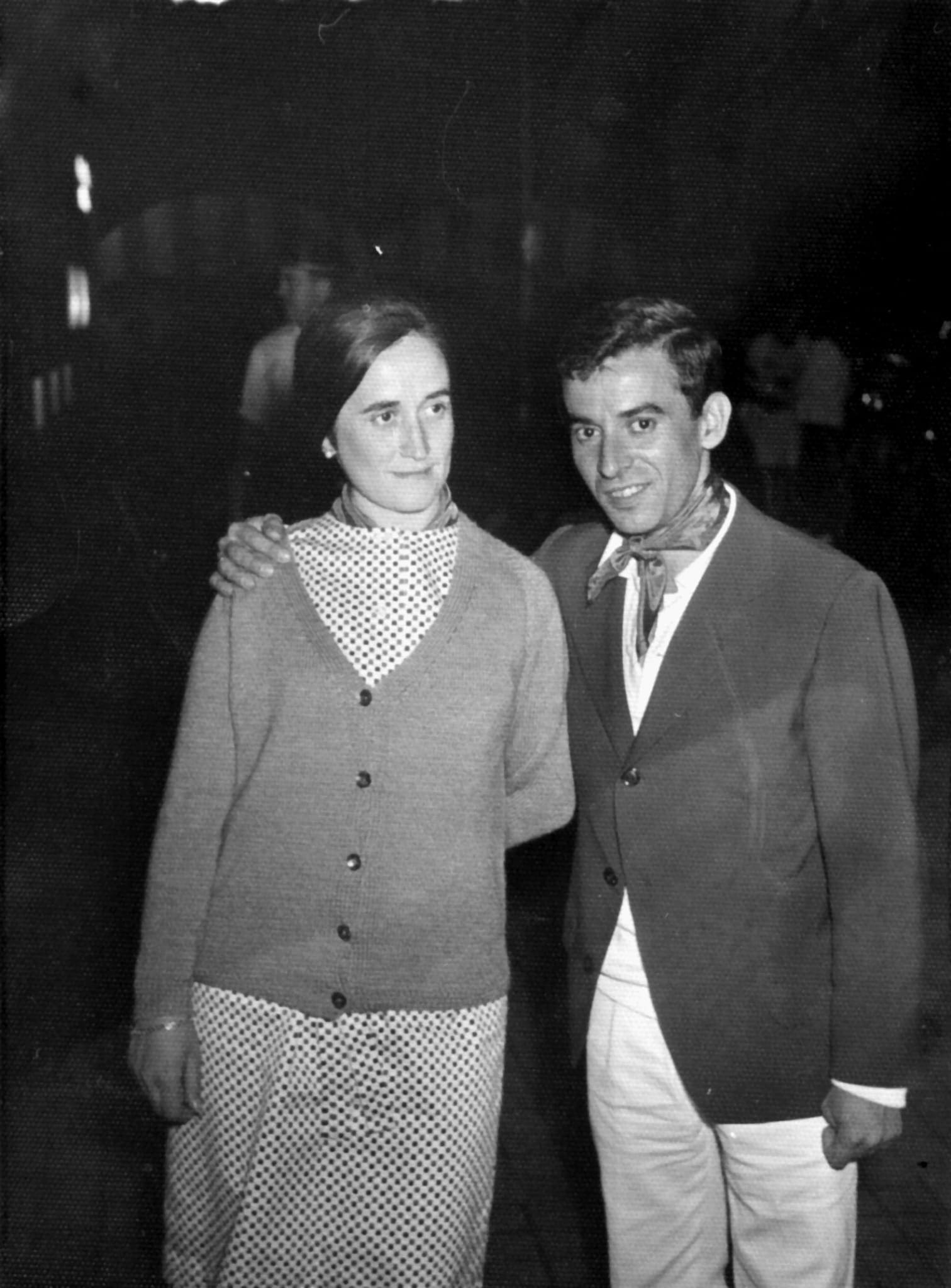
In 1955, she began working at the Santa María de las Nieves school, which had been founded by her brother, the priest Juan María del Amo, as the person in charge of the dining hall and boarding school. There she met Paco Peralta, who was a modelling teacher and had come to Madrid on a scholarship to study Fine Arts at the San Fernando School, and with whom she became friends. When Paco finished his modelling classes and while he was tidying up, she would sneak into the classroom. He would talk to her about Falla, about ‘Retablo de Maese Pedro’, about his project to put on a puppet show to take to Cadiz, his hometown... He conveyed it with such enthusiasm that it all seemed wonderful to her.
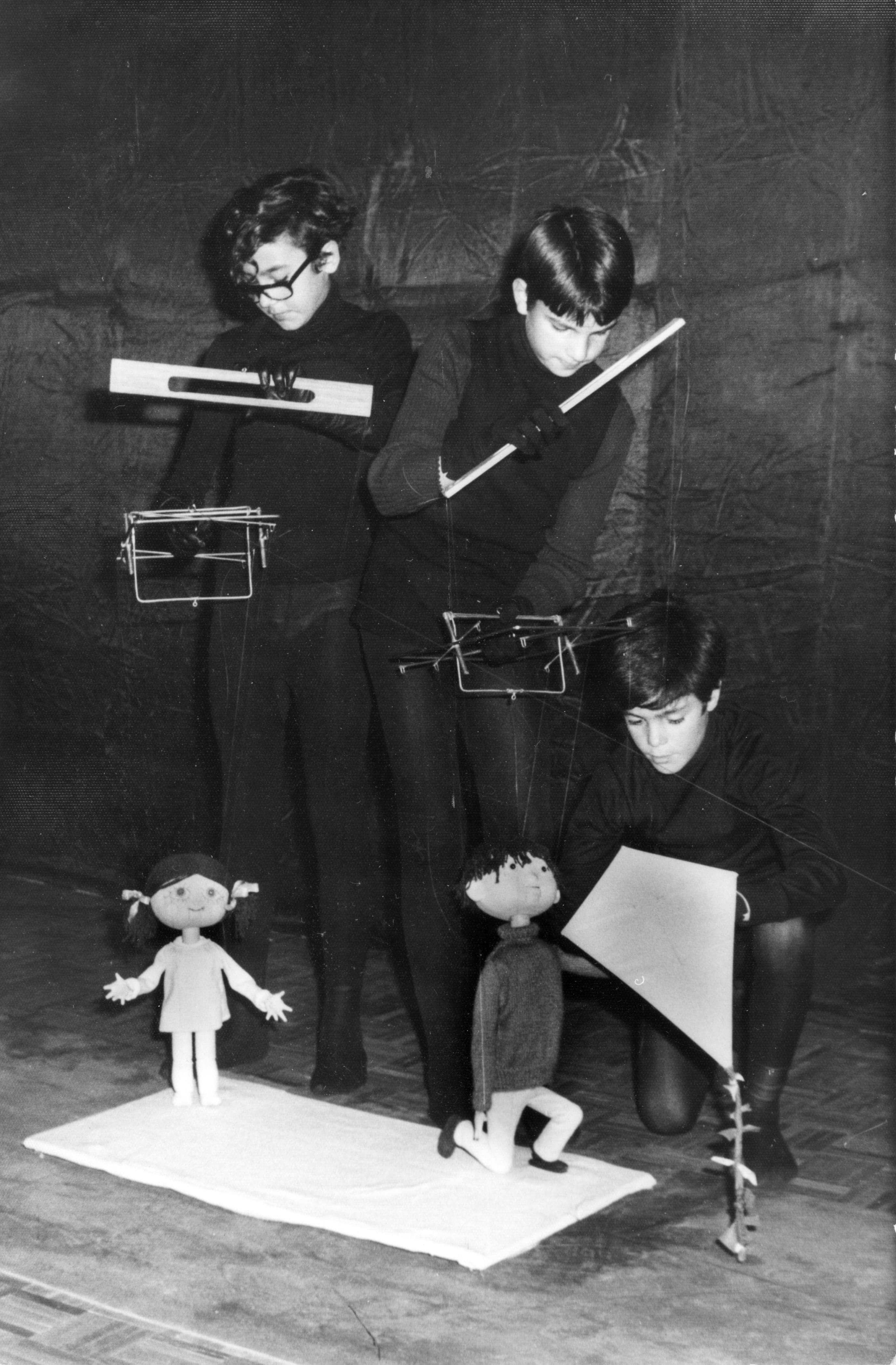
At the end of every school year, theatrical performances were organised at the school, and they always ended with a show featuring the puppets made by Paco and manipulated by the students. The size and vocation of the school, revolutionary at the time, secular in its Christian ideology, which based personal development on freedom of thought and choice, founded on values of respect and coexistence, facilitated working with the pupils, allowing it to go beyond a rigid, predetermined curriculum.
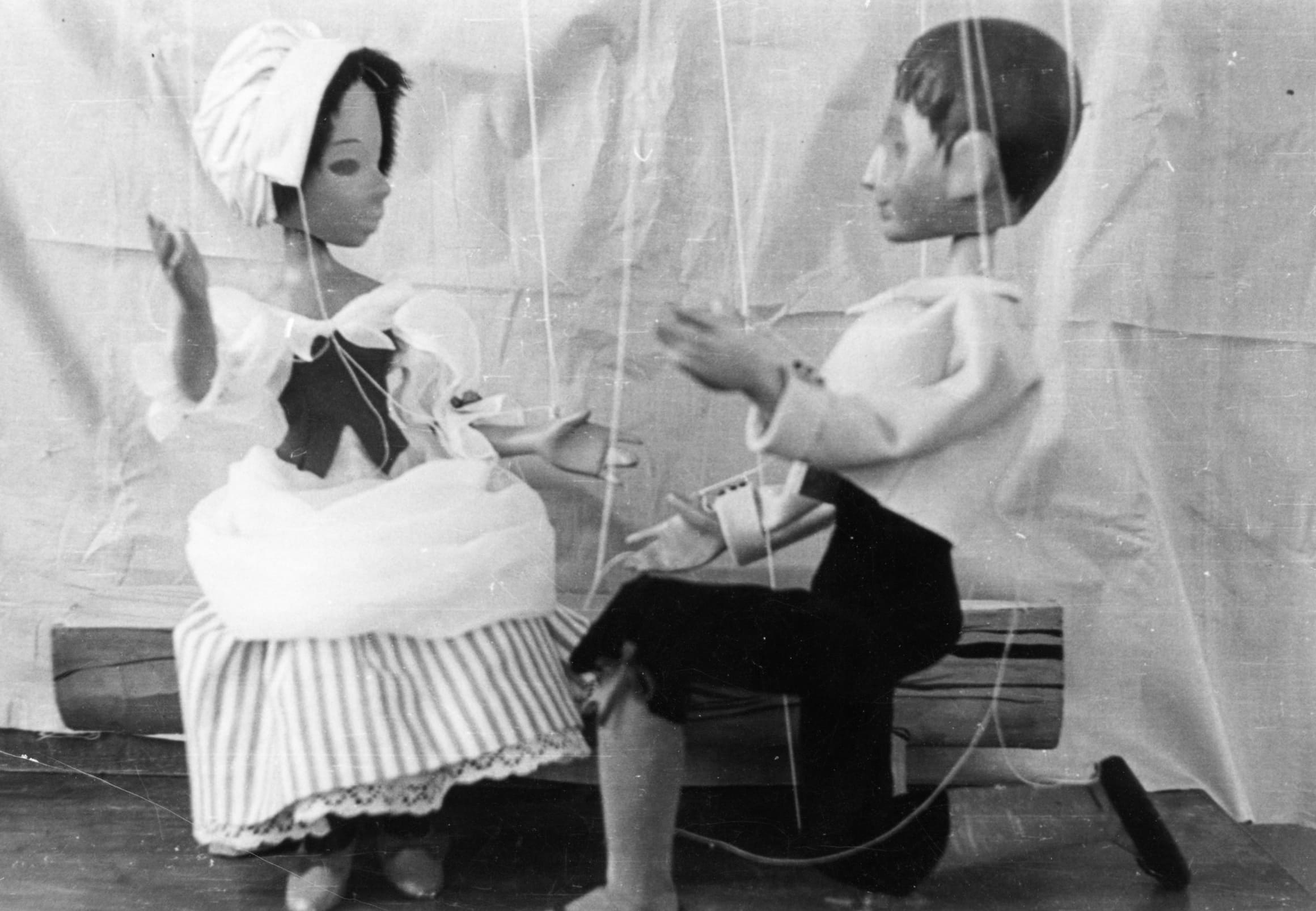
It was in this environment that the puppet workshops led by Paco were developed and the first productions were premiered. A milestone was the staging of Mozart's opera ‘Bastian and Bastiana’, which arose from a Hispavox record brought in by a school teacher, with a beautiful performance sung by children aged ten to twelve, the same age as the composer when he wrote this piece. The first costumes were made by a friend of Paco and Matilde, Mary Vega, reproducing what appeared on the cover of the record, but for the second production, which can currently be seen in the Collection, with technically superior puppets, the costumes were made by Matilde. The tailoring was not easy, as it had to be done in such a way that the puppet could have complete freedom of movement.
Other works followed: Romance de la Condesita, Retablo de Maese Pedro, Los Melindres de Melisa, and El Clérigo Ignorante, which can also be seen in the Collection. The fabrics, lace, and decorations were chosen by both of them. Nothing was left to chance. They selected the fabrics with exquisite taste, always searching high and low until they found what they needed, with the added difficulty that many of these materials were delicate and had to be sewn and placed with great care so as not to break them. Sometimes they were antique lace and unique pieces, difficult to replace.
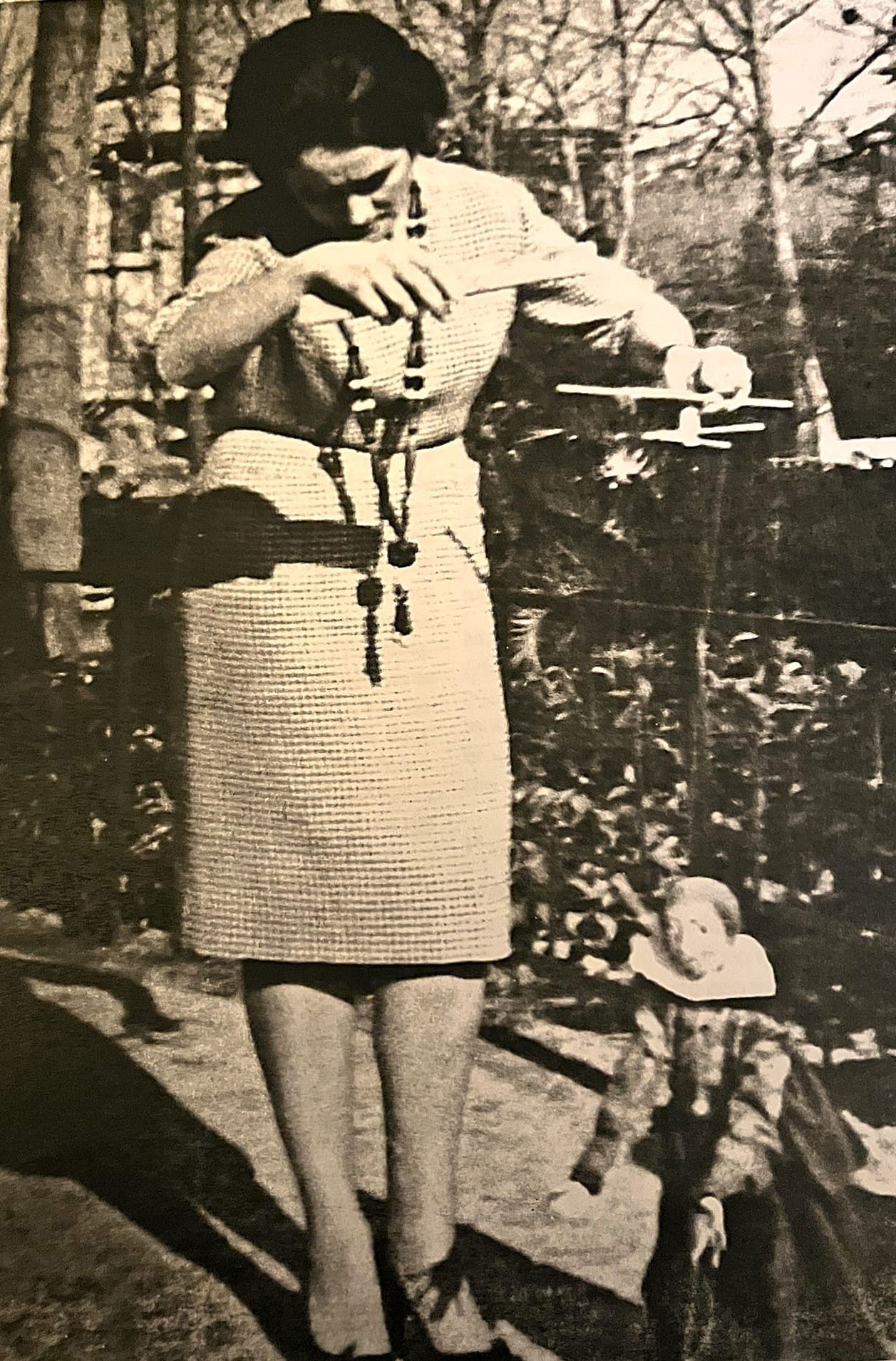
Matilde, patient and attentive to Paco's instructions, carried out the essential work of dressing and characterising each of the characters, with spectacular results. Paco's ingenuity culminated in a prodigious way with Matilde's costumes, which took to the stage in all their splendour. In addition to making the costumes, Matilde also manipulated puppets in the performances. She and Paco made a perfect team.
They married in 1964 and had five daughters. Matilde, a modern, independent woman with character and lots of energy, juggled work, puppets and raising five daughters. She has always been grateful for the help of the school employees, Leo, Nemesia, Antonia, Rafaela, Valentina and Ciria, who were essential in helping her cope with everything. The support of the school community was vital.
They travelled to give different performances with students, some of whom ended up making puppetry and theatre their profession, such as Carlos Marquerie, Juan and Carlos Muñoz, who founded the Teatro La Tartana. They were also accompanied by a school caretaker, Luis Pereira, who was a wonderful person and very skilled with iron, which was a great help in setting up the entire stage structure for manipulating the string puppets. Paco always valued how much he had learned from him.
In 1982, the five daughters joined the group, which was renamed Compañía de Marionetas Peralta del Amo (Peralta del Amo Puppet Company), with which they performed in Spain and at numerous international festivals, with the productions of ‘Frederick’ and ‘Romance de La Condesita’ (Romance of the Countess), the latter in the latest version of rod puppets, whose costumes were also made by Matilde, and which can be seen on the ground floor of the Museum of Segovia.
Matilde passed away in Madrid at the age of ninety-six on 23 January 2024. We would like to pay tribute to a life dedicated with enthusiasm to her family, her work and Paco's artistic project, to which her contribution was essential, with an indisputable quality that matched the work of the master.