


The art of puppetry in Spain
Educational application of working with puppets
In 1956, few people considered that puppets could be used as an educational resource. Paco Peralta took on this challenge in the modelling classes he taught at the Santa María de las Nieves School in Madrid. Puppetry required drawing, modelling, the use of tools, simple calculations, music to accompany the performances, literature and theatre.
Plots of classic works and musical pieces
The plots of puppet shows were children's stories of little literary quality, usually invented or adapted by the puppeteers themselves. Paco Peralta carefully chose pieces from the popular ballad tradition (La Condesita, 1957), musical pieces (El retablo de Maese Pedro, Falla, 1960) or works by classical writers (Los melindres de Belisa, Lope de Vega, 1962; El clérigo ignorante, Berceo, 1969). In contrast to puppets that are pursued by ogres and witches, Peralta shows young people the argument of high culture. When choosing children's stories, he looks for texts of extraordinary literary quality such as Frederick by Leo Lionni, Si yo fuera mayor... (If I Were Older...) by Éva Janikovszky or La Cometa de Montserrat (The Kite of Montserrat) by El Amo.
Meticulous construction and new manipulation techniques
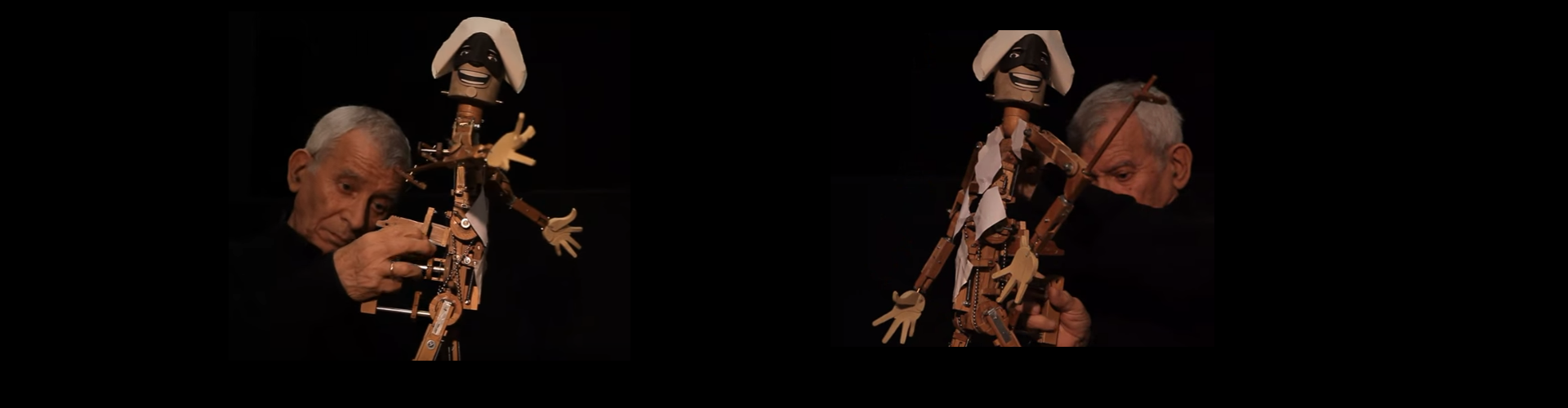
In the construction of his puppets, Peralta has conveyed contained passion, meditated perfection and practical resolution. The drilling with a small drill bit must be done at the exact point so that the puppet makes the precise gesture: "I am not aware of being a perfectionist. I want it to be clear what the puppets have to express in each play. Although it may not seem so, it is not about them being perfect, but rather expressive."
How can you achieve the movement that expresses the sigh of a countess or the joy of the reunion between two young lovers?
Peralta has not settled for a single technique; he has transcended it and invented new manipulation techniques that did not exist before.
Master and innovator of the art of puppetry
He has taught numerous courses to teachers, art school students and puppetry professionals.
There are teachers who know how to pass on their knowledge and teachers who also teach how to innovate. Paco Peralta combines both qualities. His teachings have inspired the creation of new companies and influenced the aesthetics of others.